


PHYSICAL CINEMA 2026
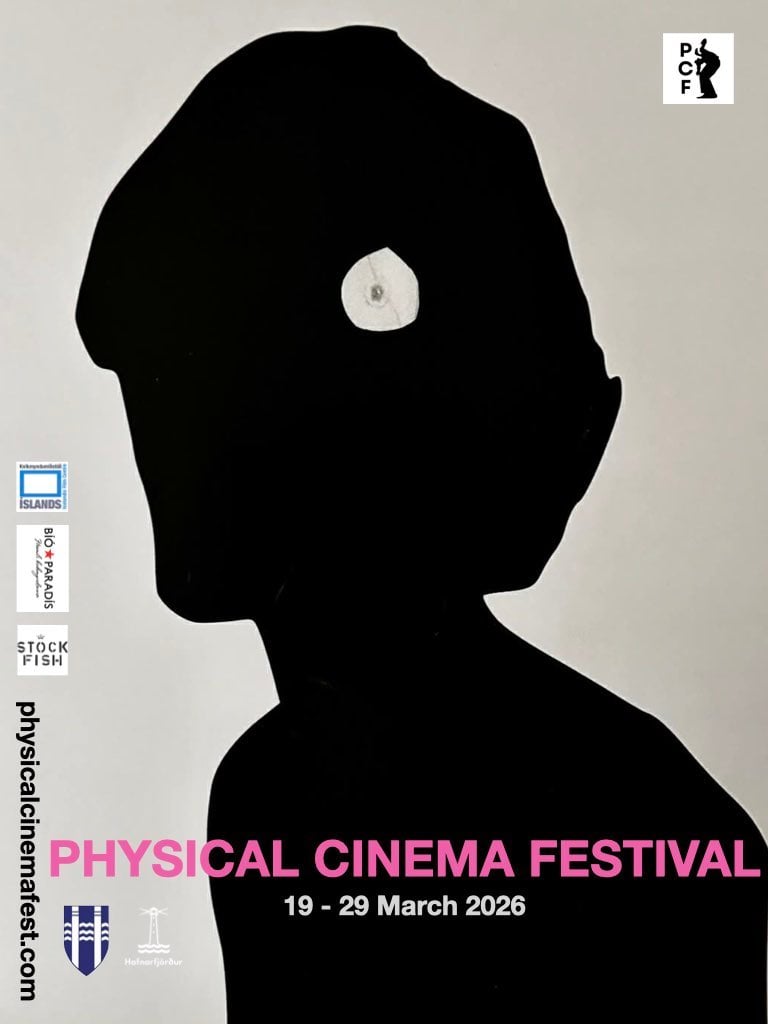
PCF-The program combines creative works in the form of short films that are classified as visual art, installations, performances, sound art, or music cinema – in an exciting and unconventional interplay.
“The Physical Cinema Festival has a new artistic vision each year. The works feature innovative and fresh approaches. Some films tell traditional or unconventional stories, while others are abstract, and some works or installations dissolve or create a poetic experience of time and space. The Physical Cinema Festival has collaborated with Stockfish since 2019.
The artistic director of Physical Cinema is Helena Jónsdóttir.
Physical Cinema Festival 2026
This year, were in and stepping outside. Quite literally.
For the first time, the Physical Cinema Festival launched an open call. Film artists from across the globe sent in work
bursting with imagination, movement, and a broad variety of approaches to what cinema can be. We present a program
that refuses to sit still. Some works unfold inside the cinema, others appear as installations spread across Reykjavík’s city
center. Cinema, it turns out, likes fresh air.
At Bíó Paradís – March 25, 26 & 27
The program features three distinct screenings at Bíó Paradís:
Listening Cinema
Music takes the lead role. In collaboration with filmmakers, musicians and composers like Nico Muhly, Isabelle Lewis and
Francesco Fabris to name a few. Artists collaborate to create short films where sound drives the narrative and image
follows its rhythm. Hence the name: Listening Cinema.
The Open Call Selection
We present a vibrant collection of short art films from around the world. The selection includes interdisciplinary works,
unexpected forms, and artists crossing borders between dance, visual art, performance, and film, all in motion.
Pioneer Women in Film and Video Art (1940s–1980s)
This screening includes a curated selection from the San Francisco Dance Film Festival celebrating trailblazing women in
film art and video art. In addition we add in a PCF selection of women film artists today. These works remind us that
experimentation has deep roots, and that many women have reshaped the language of cinema throughout history.
Beyond the Cinema Physical Cinema extends beyond Bíó Paradís.
From March 19–29, an exhibition is presented at marvaða, a women-run arts space dedicated to music, featuring artists
living in Iceland surrounded with film art by pioneering women filmmakers from around the world.
The festival spreads outdoors and includes works presented publicly throughout Reykjavík and extends to Hafnarfjörður.
Close to our venue Bíó Paradís All Eyes, by Peder Bjurman, is projected onto selected buildings. The projections continue at
Héraðsdómur Íslands, Reykjavík City Hall and Tjarnarbíó. On Skólavörðustígur rainbow street, 12 Tónar music shop and
Hafnartorg Gallery video works will be presented on public screens, extending cinema into public space.
The full map of works and locations will be available on our website.
Physical Cinema Festival 2026 invites the viewer to move with it, between screenings, between spaces, between sound and
image. Take a walk between events at Bíó Paradís. There’s no entrance fee for the city installations.
PCF-The program combines creative works in the form of short films that are classified as visual art, installations, performances, sound art, or music cinema – in an exciting and unconventional interplay.
“The Physical Cinema Festival has a new artistic vision each year. The works feature innovative and fresh approaches. Some films tell traditional or unconventional stories, while others are abstract, and some works or installations dissolve or create a poetic experience of time and space. The Physical Cinema Festival has collaborated with Stockfish since 2019.
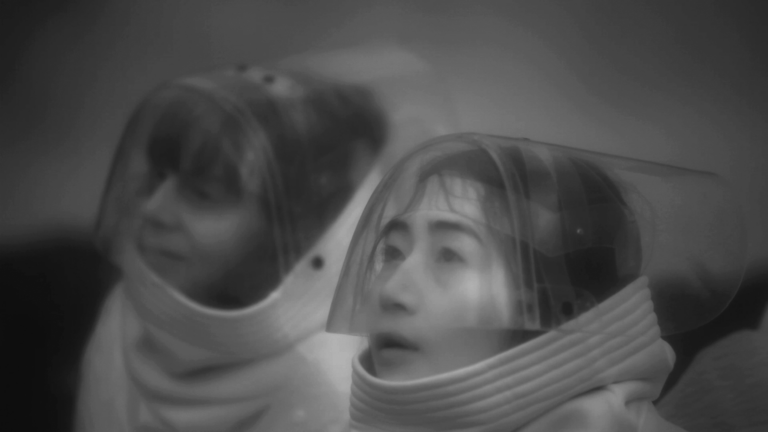
This year, we particularly celebrate intriguing guests at the festival. German artist Martin Klukas will present his award-winning film, Ongoing Process of Trying to Make Sense, characterized by humor and insight. Irish artist Clare Langan will showcase her beautiful film Heart of a Tree, featuring music by Jóhann Jóhannsson. Clare will also hold a masterclass, providing insight into her creative process and how she shapes her unique artistic vision in the Icelandic landscape.
The artistic director of Physical Cinema is Helena Jónsdóttir.”
BÍÓ PARADÍS
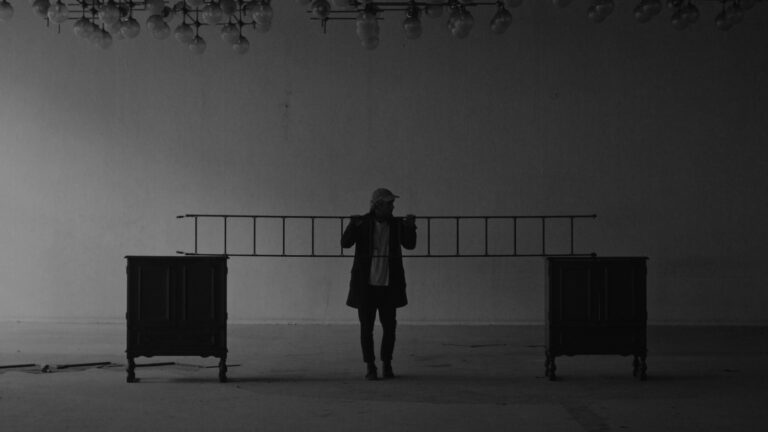
The ongoing process of trying to make sense
Martin Klukas – 16:05 min
Processes of questioning, searching and finding meaning expand the connection to what is satisfying and unifying or perhaps just a bit of humor along the way. I place myself in roles where performer, filmmaker, and recipient converge. In the process, a series of parables emerge, exploring modes of representation, decontextualization, deconstruction and sequencing in text, image and sound. From the technical aspects of filmmaking to the dance of breaking, every element tells a story that captures the essence of an abandoned place. Here space and objects are activated, opening up new perspectives on reality.
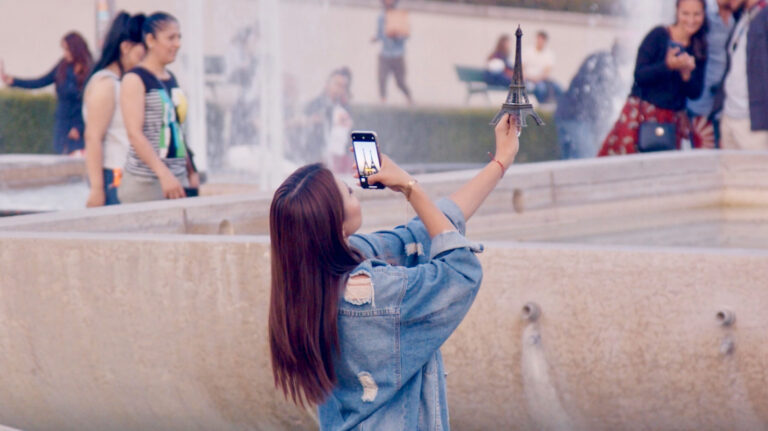
The end of something
In the last summer before the corona pandemic, a techno-religious spectacle unfolds underneath the Eiffel Tower – a touristic ritual of life to those who came before, to those who will come in the future, and to those who are present now. A final fireworks display in the summer sky of late capitalism, with promises of romantic love and eternal beauty. A daydream of mass tourism – the blessing and curse of Paris.
Joy Souce
William Ludwig Lutgens – 13:00 min
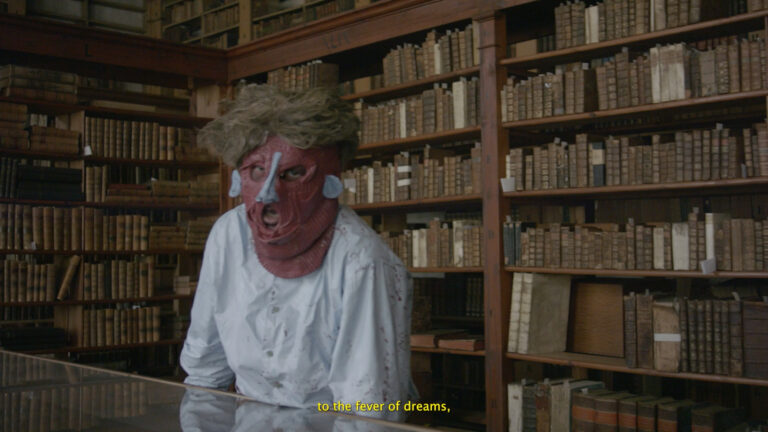
The sharp, satirical undertone of the work is key to Lutgens’ distinctive visual language, developed across painting, drawing, and installation. The characters, costumed with masks, wigs, and painted clothing, navigate a world of excessive superficiality and productivity, reflecting themes of self-rejection and the difficulty of forming meaningful social and physical connections. The title, Joy Sauce, plays on the Lacanian notion of jouissance, a paradoxical form of enjoyment that exceeds mere pleasure, often involving excess, pain, or the transgression of limits. Lutgens examines the connection between the pursuit of passion and the transgressive nature of jouissance—both potentially liberating and self-destructive—frequently linked to the abject, that which we reject yet remain drawn to.
Time to wake up
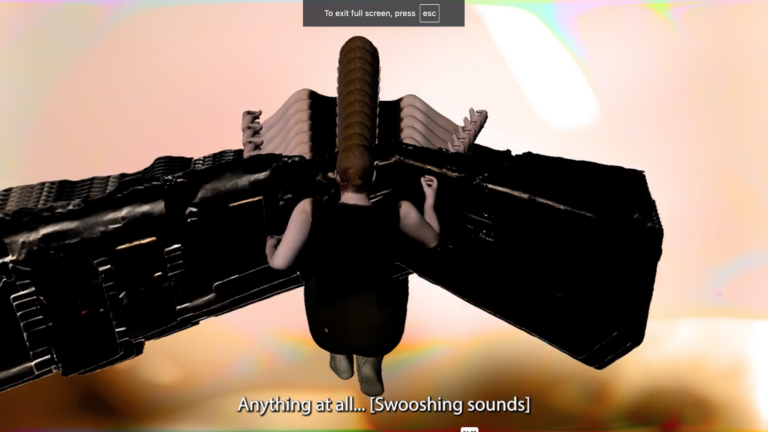
This video considers the potential of moving images, 3D scans, code, motion capture, and avatars as digital archival tools that support and expand how dance and choreography are experienced, created, taught, documented, shared, archived, and remembered. The work blends virtual camera footage from Freya’s game environment with real-life video, including footage of Freya’s child, Ylfa, ringing Tedd’s bells and a cockroach in Freya’s oven. By bridging deeply personal scans and video with the artifice of AI-generated movement, the work explores the intersections of beginnings and ends, birth and legacy, presence and preservation—pondering how dance and choreography will exist 50 years from today in light of sociopolitical and technological change concurrent to environmental degradation.

Je m‘aime
On a remote island, where the cycle of all beings become one beginning without end, a hunter d
Heart of a tree
Joy Souce er kvikmynd William Ludwig Lutgens sem er sett fram sem brúðuleikhús í sögulegri klausturrúst sem hefur umbreyst í borgarlegt rými. Myndin skoðar stöðu nútíma vinnuafls – sem bæði húsbændur og þrælar sjálfs síns – fastir í blekkingu um frelsi og endalausa frammistöðu.
Zombíuvæddar persónur spegla missi sjálfsins í kerfi þar sem efnahagslegt álag dregur fram það versta. Með beittum háði sýnir Lutgens með sínu einstaka myndmáli – þróuðu í gegnum málverk, teikningar og innsetningar – grímuklæddar verur rata í gegnum heim yfirborðsmennsku og óþreytandi afkastagetu. Myndin snertir á sjálfsafneitun og baráttunni fyrir ekta tengslum. Titillinn vísar í Lacan-hugtakið jouissance, mótsagnakennda nautn sem tengist ýkjum, sársauka og hinu viðbjóðslega – því sem við bæði hrindum frá okkur og sækjumst í.